Home American Journal of Archaeology Archaeological Institute of America
American Journal of Archaeology

Search

Main menu

  • Home
  • About
  • Subscribe
  • Advertise
  • Permissions and Reprints
  • Contacts
  • Current Issue
  • For Authors
    • Submission Guidelines
    • Submit Online
    • Supporting Material
  • For Students
    • General Resources
    • Academic Resources
    • Careers
    • Project Websites
    • Blogs
    • Multimedia
  • Author Profiles
  • Archive
    • Past Issues
    • Article Search
    • Back Issue Sales
  • Open Access
    • Editor's Picks
    • Book Reviews
    • Books Received
    • Review Articles
    • Museum Reviews
    • Print-Published Content
    • Supplementary Content
    • Image Galleries
    • Volume Indexes

April 2011 (115.2)

  • Image Gallery

New Fragments of Aegean-Style Painted Plaster from Tel Kabri, Israel

Assaf Yasur-Landau
Eric H. Cline
Nurith Goshen
115.2
View abstract

Unless otherwise noted in the figure caption, images are by the author(s).

1
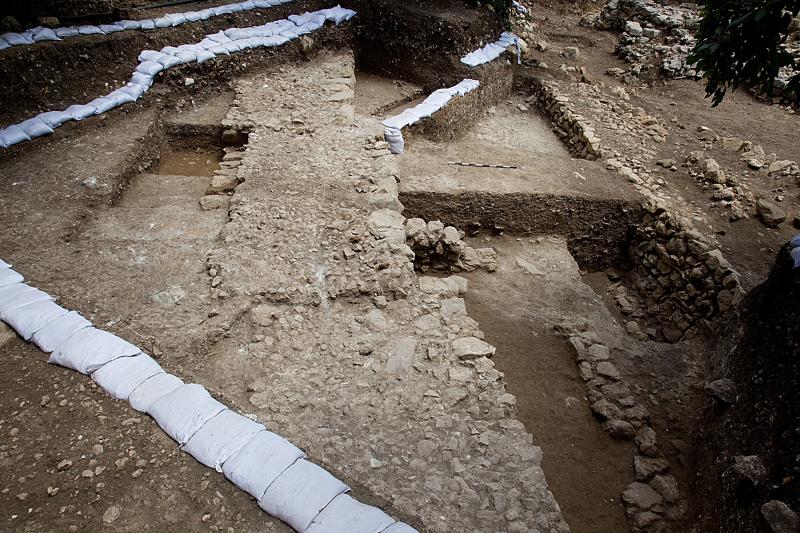
Fig. 1. Unusual stone foundation to the north of Wall 673 (i.e., outside the palace).
2
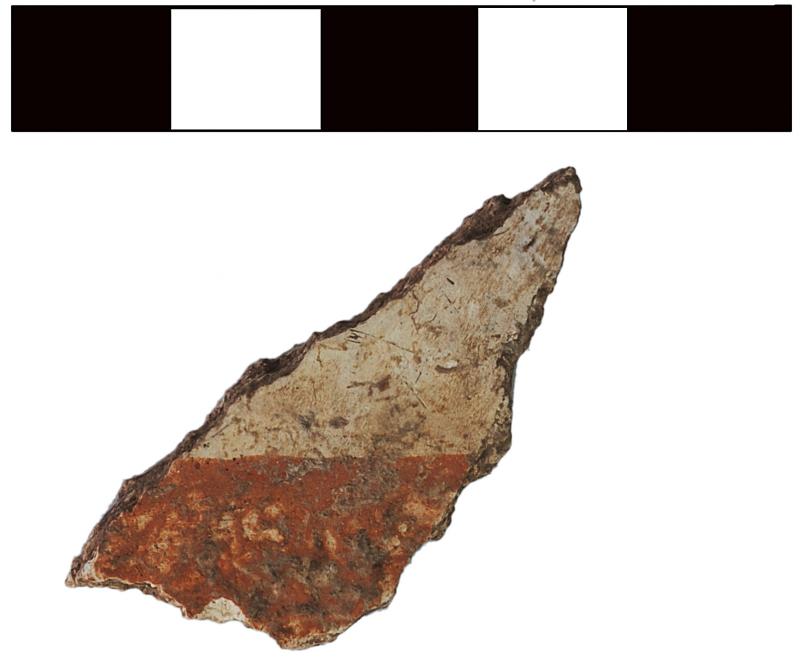
Fig. 2. Painted plaster fragment (2119–7) with red or brown paint in a miniature style, from area D-West.
3
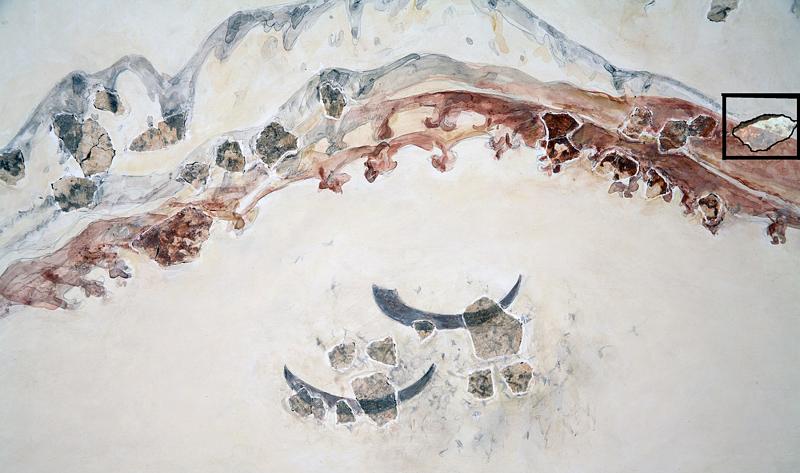
Fig. 3. Suggested reconstruction and placement of Fragment 2119–7 from area D-West, as part of a hilltop within the landscape depicted in a miniature composition.
4
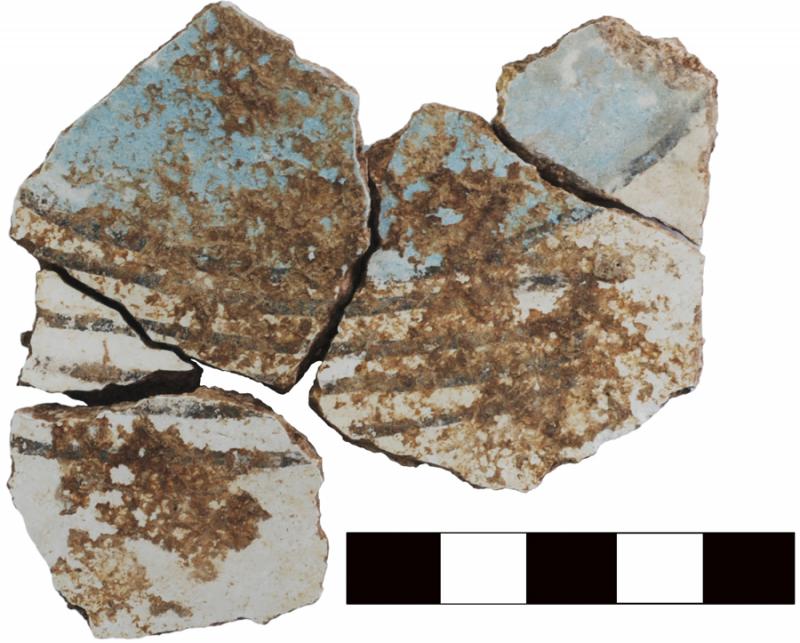
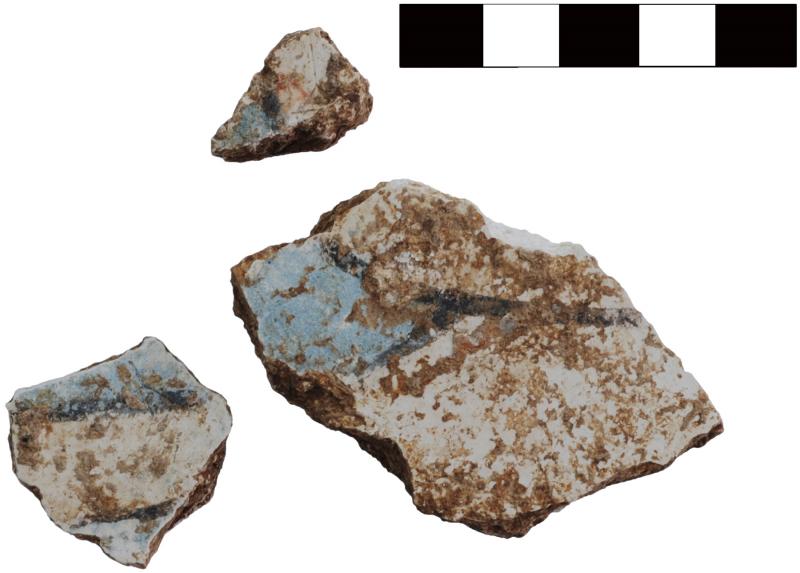
Fig. 4. Joining fragments (3055–15a, 3055–16f) of painted wall fresco, with blue, white, and black decoration, from area D-South.
5
Fig. 5. Joining fragments (3055–10, 3055–15) of painted wall fresco, with blue, white, and black decoration, from area D-South.
6
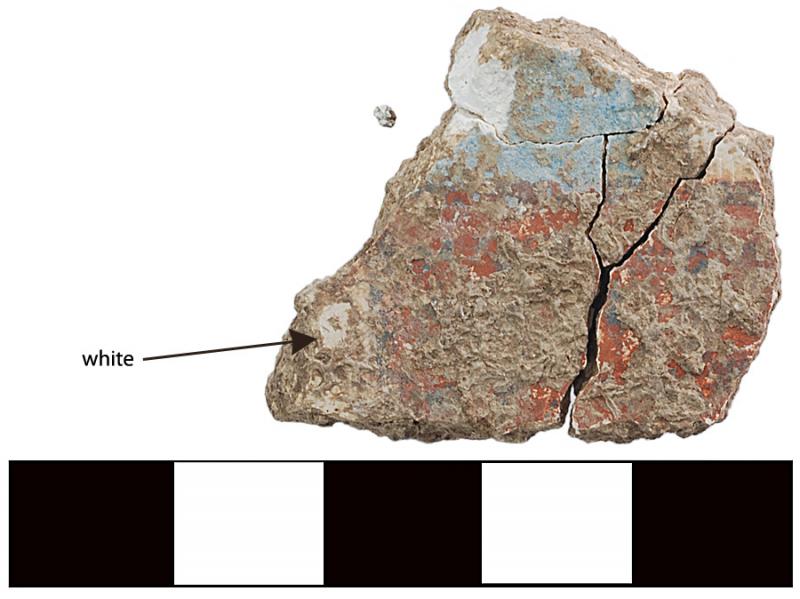
Fig. 6. Plaster fresco fragment (3055–16c) with red, blue, and white paint, from area D-South.
7
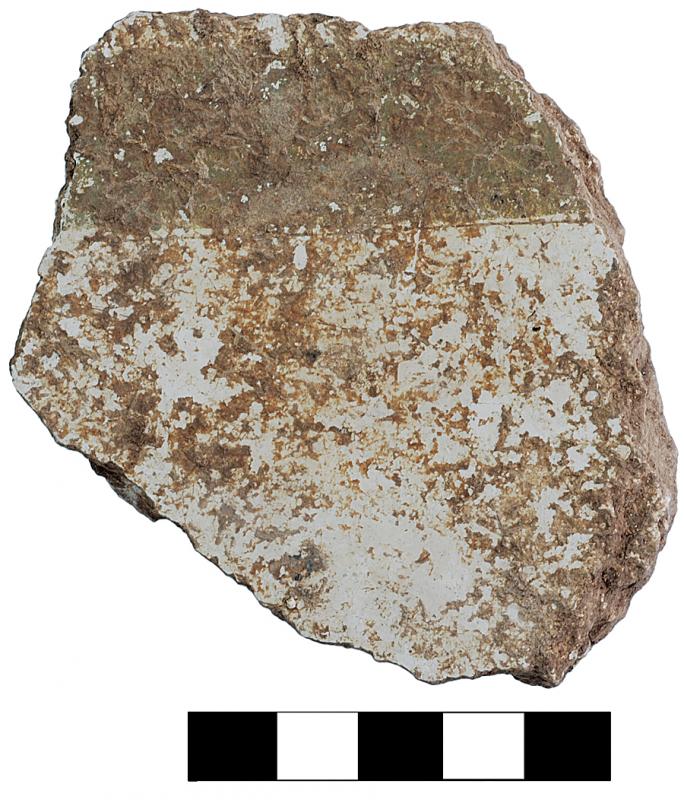
Fig. 7. Fragment (3055–13a) of thick white plaster decorated with a dark band, perhaps brown or black, possibly a fragment from a painted floor, from area D-South.
8
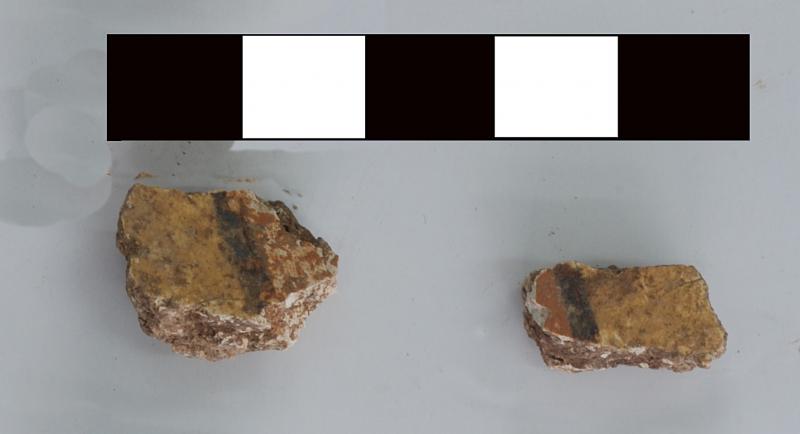
Fig. 8. Fragments (3055–16b, 3055–16d) of painted wall fresco, with red, orange (or yellow), and black decoration, from area D-South.
DOI: 
10.3764/ajaonline1152.Cline.suppl
  • Home
  • About
  • Subscribe
  • Society for the AJA
  • For Authors
  • Open Access
  • Archive
  • For Students
  • AJA e-Update
  • RSS Feed
  • Permissions and Reprints
  • Advertise
  • Contacts
  • Privacy Policy

© 2013 Archaeological Institute of America