Home American Journal of Archaeology Archaeological Institute of America
American Journal of Archaeology

Search

Main menu

  • Home
  • About
  • Subscribe
  • Advertise
  • Permissions and Reprints
  • Contacts
  • Current Issue
  • For Authors
    • Submission Guidelines
    • Submit Online
    • Supporting Material
  • For Students
    • General Resources
    • Academic Resources
    • Careers
    • Project Websites
    • Blogs
    • Multimedia
  • Author Profiles
  • Archive
    • Past Issues
    • Article Search
    • Back Issue Sales
  • Open Access
    • Editor's Picks
    • Book Reviews
    • Books Received
    • Review Articles
    • Museum Reviews
    • Print-Published Content
    • Supplementary Content
    • Image Galleries
    • Volume Indexes

July 2007 (111.3)

  • Image Gallery

Looking Again at Pompey's Theater: The 2005 Excavation Season

James E. Packer
John Burge
Maria C. Gagliardo
111.3
View abstract

Unless otherwise noted in the figure caption, images are by the author(s).

1
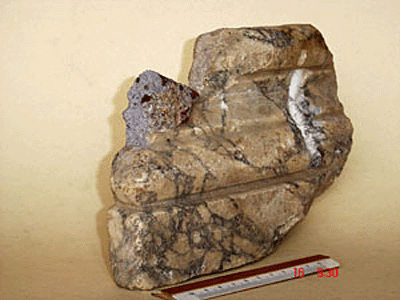
Fig. 1. The pavonazetto base molding used in the foundation for the excavation area (D. Silenzi).
2
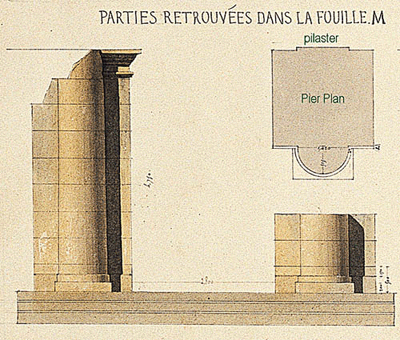
Fig. 2. The bay from the facade excavated by Baltard in 1837 (after Baltard 1837, drawing 3; courtesy École Nationale Supèrieure des Beaux-Arts, Paris).
3
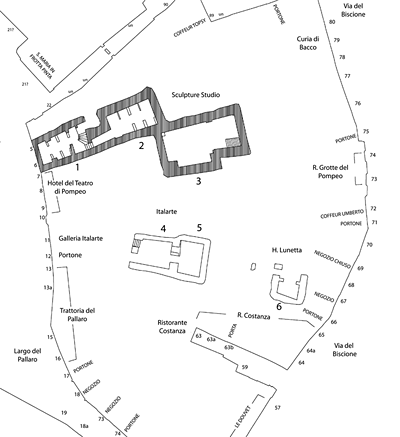
Fig. 3. Map of cellar rooms in the Theater of Pompey at Largo del Pallaro, 5–6. The small numbers in the street are addresses; the larger numbers indicate cellar rooms (drawing modified from D. Silenzi; courtesy University of London).
4
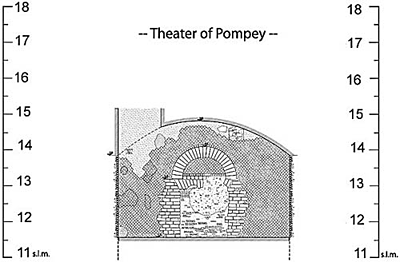
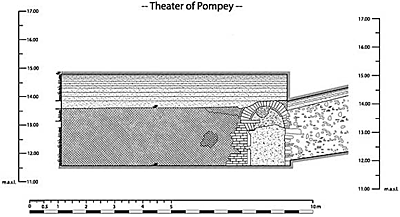
Fig. 4. Largo del Pallaro, 5–6, Room 2, west wall (drawing by D. Silenzi; courtesy University of London).
5
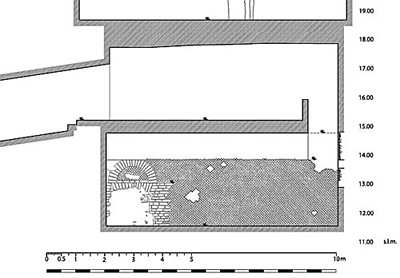
Fig. 5. Largo del Pallaro, 5–6, Room 2, south wall (drawing by D. Silenzi; courtesy University of London).
6
Fig. 6. Largo del Pallaro, 5–6, Room 2, north wall (drawing by D. Silenzi; courtesy University of London).
7
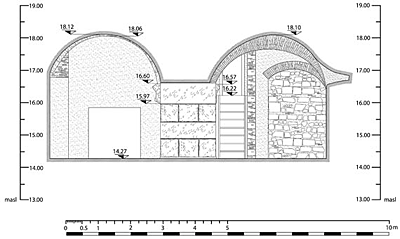
Fig. 7. Largo del Pallaro, 5–6, interior of the arcade between Rooms 1/3 and 2/4, a section of the west wall of the aditus maximus (drawing by D. Silenzi; courtesy University of London).
8
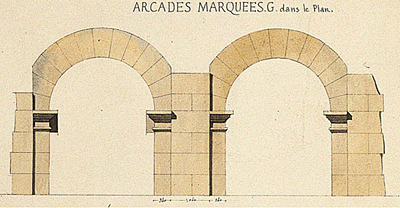
Fig. 8. Largo del Pallaro, 5–6, exterior of the arcade between Rooms 1/3 and 2/4, a section of the east wall of the aditus maximus (after Baltard 1837, pl. 3; courtesy École Nationale Supèrieure des Beaux-Arts, Paris).
9
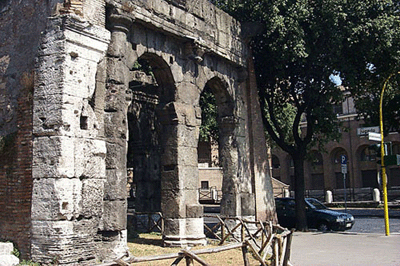
Fig. 9. The late first-century B.C.E. arcade across from the Theater of Marcellus.
10
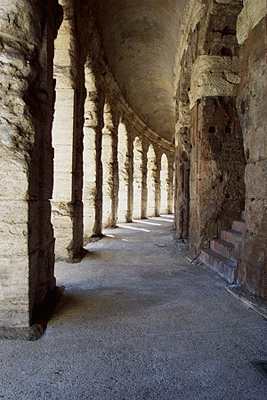
Fig. 10. The ambulacrum of the Theater of Marcellus. Note the construction of the walls (tuff blocks with travertine reinforcements) and the pavement (slabs of travertine).
11
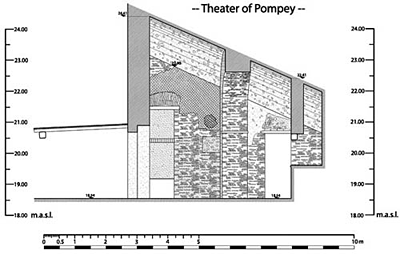
Fig. 11. Section of the south wall in the main dining room of Ristorante Costanza, showing the raking vault that carried the seats of the media cavea (drawing by D. Silenzi; courtesy University of London).
12
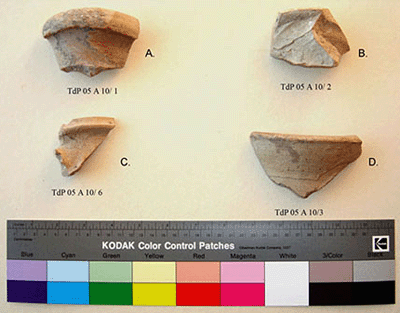
Fig. 12. Sherds: a, TdP 05 A 10/1; b, TdP 05 A 10/2; c, TdP 05 A 10/6; d, TdP 05 A 10/3.
13
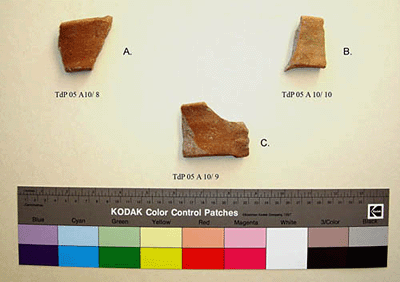
Fig. 13. Sherds: a, TdP 05 A 10/8; b, TdP 05 A 10/10; c, TdP 05 A 10/9.
14
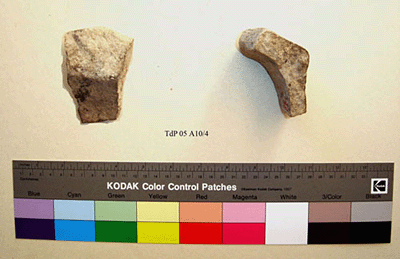
Fig. 14. Sherd TdP 05 A 10/4.
15
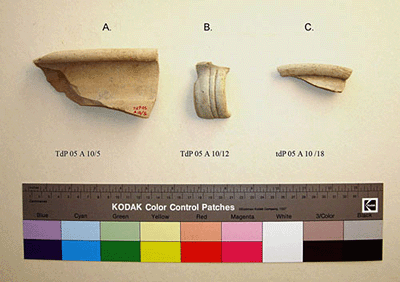
Fig. 15. Sherds: a, TdP 05 A 10/5; b, TdP 05 A 10/12; c, TdP 05 A 10/18.
16
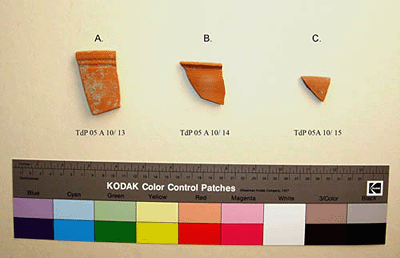
Fig. 16. Sherds: a, TdP 05 A 10/13; b, TdP 05 A 10/14; c, TdP 05 A 10/15.
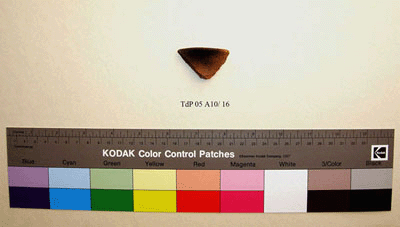
17
Fig. 17. Sherd TdP 05 A 10/16.
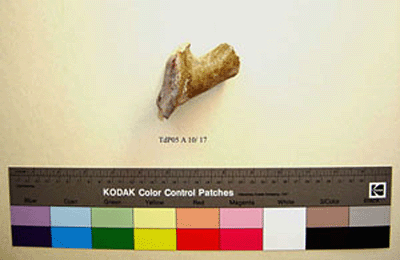
18
Fig. 18. Sherd TdP 05 A 10/17.
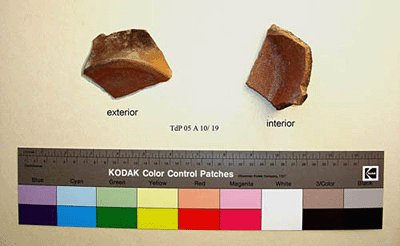
19
Fig. 19. Sherd TdP 05 A 10/19.

Works Cited

Baltard, V. 1837. "Mémoire explicatif de la Restoration du Théâtre de Pompée." Ms. no. 268; acc. no. 2200. Paris: École Nationale Supérieure des Beaux-Arts.

DOI: 
10.3764/ajaonline1113.Packer.suppl
  • Home
  • About
  • Subscribe
  • Society for the AJA
  • For Authors
  • Open Access
  • Archive
  • For Students
  • AJA e-Update
  • RSS Feed
  • Permissions and Reprints
  • Advertise
  • Contacts
  • Privacy Policy

© 2013 Archaeological Institute of America