Home American Journal of Archaeology Archaeological Institute of America
American Journal of Archaeology

Search

Main menu

  • Home
  • About
  • Subscribe
  • Advertise
  • Permissions and Reprints
  • Contacts
  • Current Issue
  • For Authors
    • Submission Guidelines
    • Submit Online
    • Supporting Material
  • For Students
    • General Resources
    • Academic Resources
    • Careers
    • Project Websites
    • Blogs
    • Multimedia
  • Author Profiles
  • Archive
    • Past Issues
    • Article Search
    • Back Issue Sales
  • Open Access
    • Editor's Picks
    • Book Reviews
    • Books Received
    • Review Articles
    • Museum Reviews
    • Print-Published Content
    • Supplementary Content
    • Image Galleries
    • Volume Indexes

January 2010 (114.1)

  • Image Gallery

The Tarquinia Project: A Summary of 25 Years of Excavation

Maria Bonghi Jovino
114.1
View abstract

Unless otherwise noted in the figure caption, images are by the author(s).

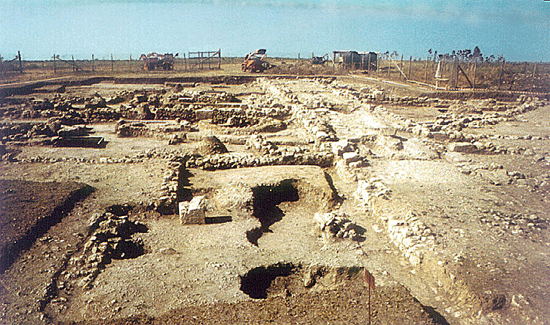
1
Fig. 1. View of the Area Sacra/Monumental Complex during excavation (Pian di Civita) (Tarquinia Project).
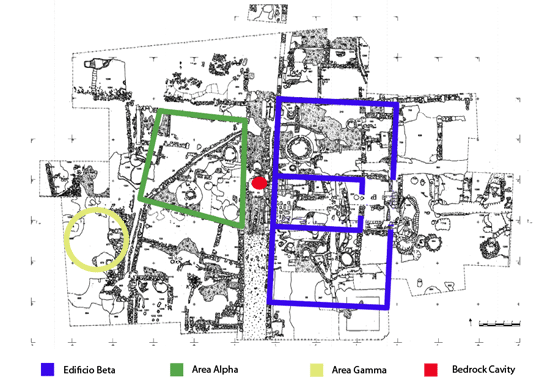
2
Fig. 2. Area Sacra/Monumental Complex, showing Edificio Beta, Area Alpha, Area Gamma, and the location of the bedrock cavity (Pian di Civita) (Tarquinia Project).
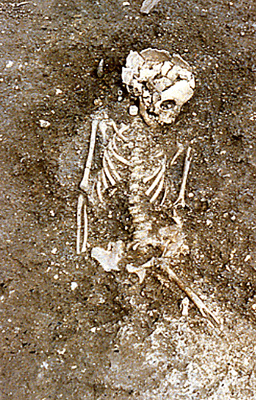
3
Fig. 3. The skeleton of Individual 1 (Pian di Civita) (Tarquinia Project).
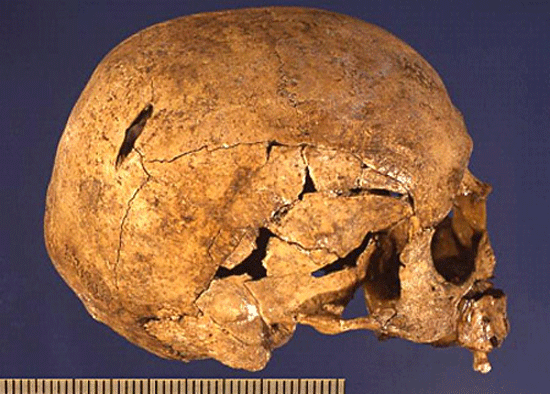
4
Fig. 4. The skull of Individual 10 showing the signs of the mortal blows (Pian di Civita) (Tarquinia Project).
5
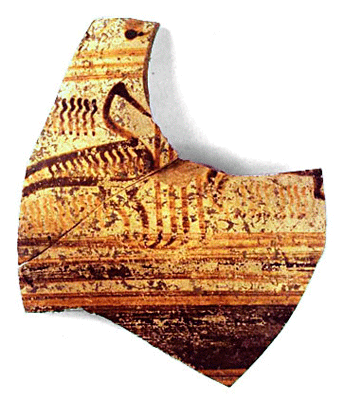
Fig. 5. The Euboean jug found with Individual 10 (Pian di Civita) (Tarquinia Project).
6
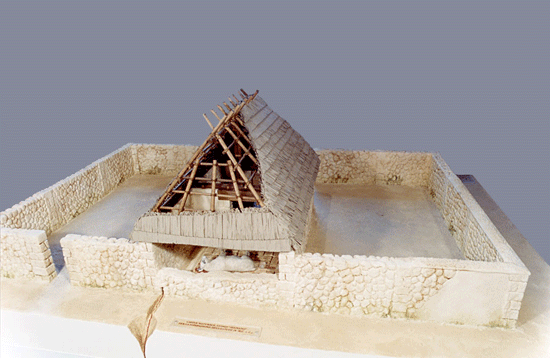
Fig. 6. Reconstruction of Edificio Beta showing the backside with the conduit to the bedrock cavity (Pian di Civita) (Tarquinia Project).
7
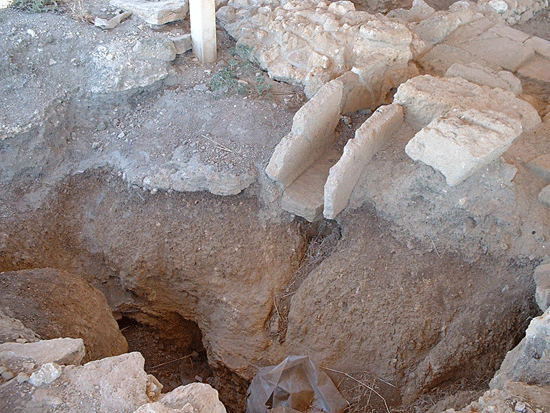
Fig. 7. The conduit to the bedrock cavity and the cavity (Pian di Civita) (Tarquinia Project).
8
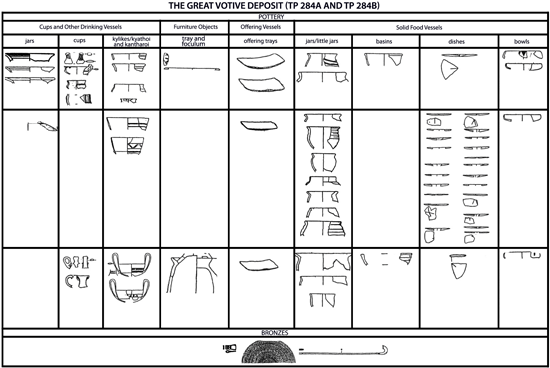
Fig. 8. The finds of the votive deposits in front of Edificio Beta (Pian di Civita) (Tarquinia Project).
9
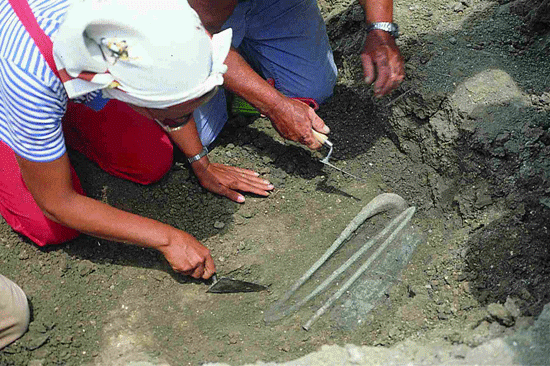
Fig. 9. The excavation of the "bronzes" from TP 284A (Pian di Civita) (Tarquinia Project).
10
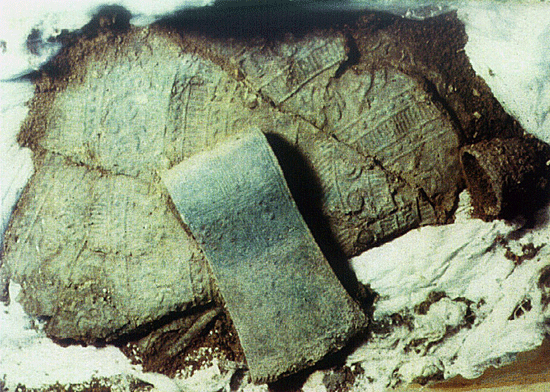
Fig. 10. The axe below the shield from TP 284A (Pian di Civita) (Tarquinia Project).
11
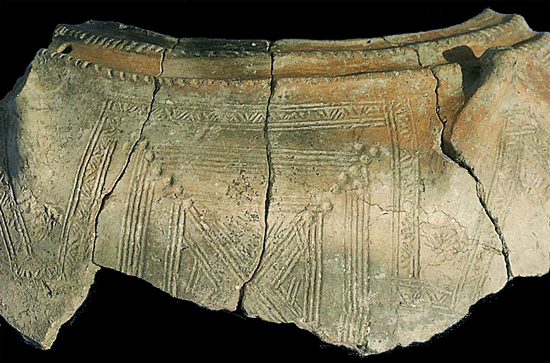
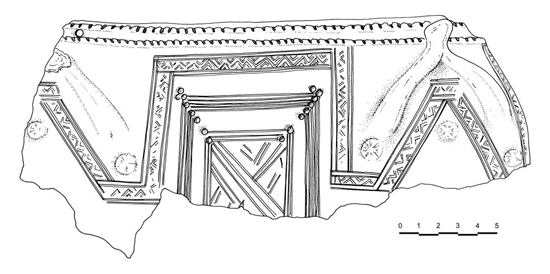
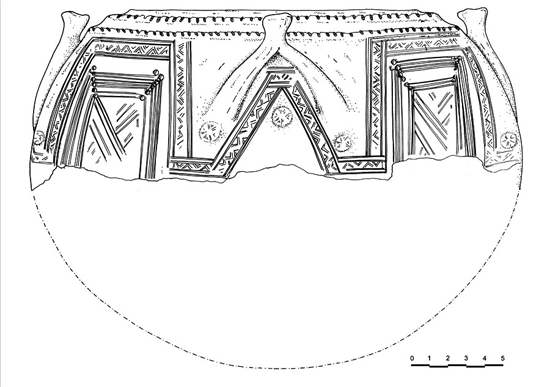
Fig. 11. An impasto lebes of the Orientalizing period, found in Area Alpha, which shows the persistence of traditional geometric decoration (Pian di Civita) (Tarquinia Project).
12
Fig. 12. The decoration of the impasto lebes, side A (Pian di Civita) (Tarquinia Project).
13
Fig. 13. The decoration of the impasto lebes, side B (Pian di Civita) (Tarquinia Project).
14
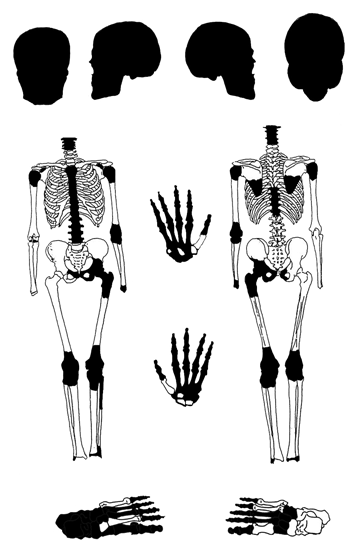
Fig. 14. Skeleton of Individual 9; missing parts are indicated in black (Pian di Civita) (Tarquinia Project).
15
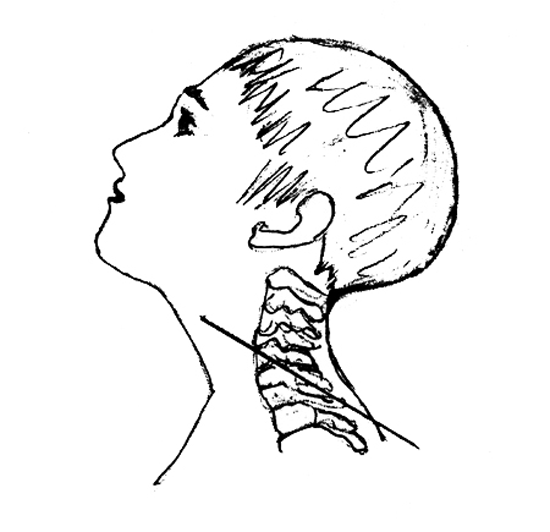
Fig. 15. The direction of the head cutting of Individual 9 (Pian di Civita) (Tarquinia Project).
16
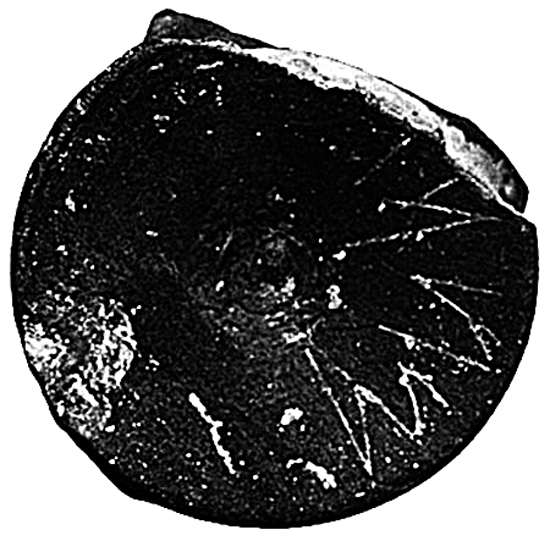
Fig. 16. The inscription mi uni on a bucchero vase (Pian di Civita) (Tarquinia Project).
17
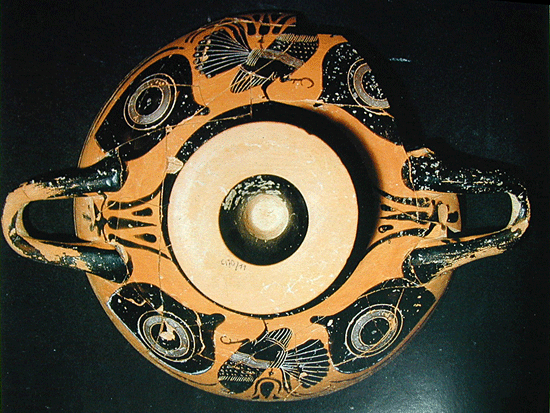
Fig. 17. A kylix by the Tübingen D41 Painter (ca. 520 B.C.E.), found upside down in Pit 39 (Pian di Civita) (Tarquinia Project).
18
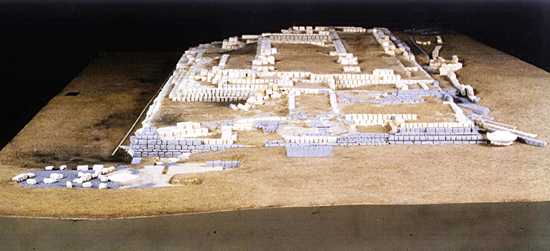
Fig. 18. Scale model of the sanctuary of the Ara della Regina as seen from the front (eastern side) (Pian della Regina) (Tarquinia Project).
19
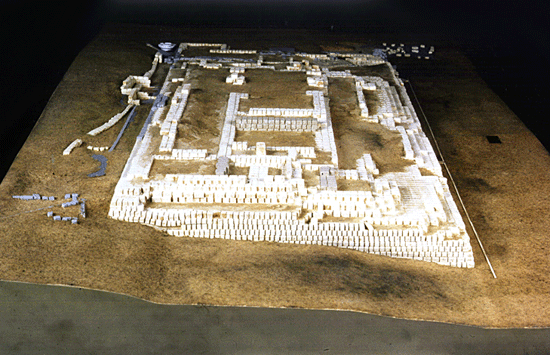
Fig. 19. Scale model of the sanctuary of the Ara della Regina as seen from the back (western side) (Pian della Regina) (Tarquinia Project).
20
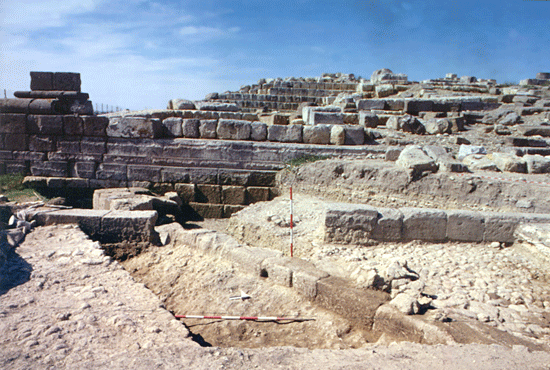
Fig. 20. Sanctuary of the Ara della Regina: southeast corner during the excavation (Pian della Regina) (Tarquinia Project).
21
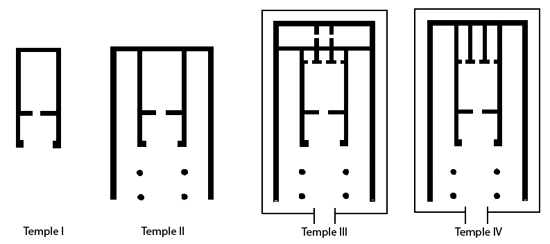
Fig. 21. Sanctuary of the Ara della Regina: plans of the four temples (Pian della Regina) (Tarquinia Project).
22
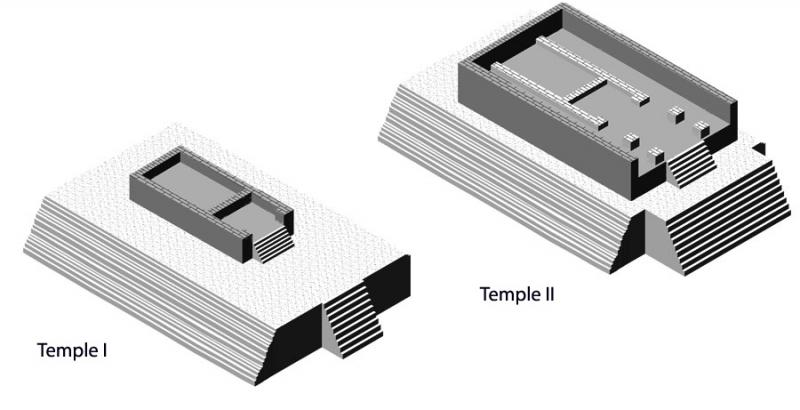
Fig. 22. Sanctuary on the Ara della Regina: preliminary hypothetical reconstruction of Temples I and II (Pian della Regina) (Tarquinia Project).
DOI: 
10.3764/ajaonline114.1.BonghiJovino.suppl
  • Home
  • About
  • Subscribe
  • Society for the AJA
  • For Authors
  • Open Access
  • Archive
  • For Students
  • AJA e-Update
  • RSS Feed
  • Permissions and Reprints
  • Advertise
  • Contacts
  • Privacy Policy

© 2013 Archaeological Institute of America