|
|
Fig. 1. Site plan of Mersa/Wadi Gawasis. |
|
 |
|
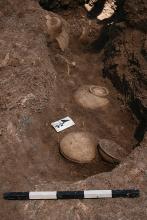
Fig. 2. Blade 2, excavated at the entrance to Cave 2 at Mersa/Wadi Gawasis, associated with early New Kingdom pottery. |
|
 |
|
Fig. 3. Hieroglyphic inscription on Cargo Box 2 from Mersa/Wadi Gawasis, with the cartouche of King Amenemhat IV of the 12th Dynasty, below which is the text describing the box’s contents (“The wonders of Punt”). |
|
 |
|
Fig. 4. The tapering end of a knife-shaped cedar plank recovered in 2006 at Mersa/Wadi Gawasis. Visible on its outer face is a through mortise that contains significant remnants of a copper alloy “strap” that would have fastened to an adjoining timber. Along each edge are several paired mortise-and-tenon joints, two of which still contain their original tenons. |
|
 |
|
Fig. 5. This wide and thick cedar timber, found inside a cave at Mersa/Wadi Gawasis in 2007, remains to be fully excavated. Both ends have clearly been reworked. The left end of the upper face displays parts of two dovetail-shaped open mortises. A through mortise visible near the lower edge retains traces of a copper alloy “strap.” Two round peg ends can be seen toward the upper edge. |
|
 |
|
Fig. 6. A Sabir culture sherd from Aden region, excavated at Mersa/Wadi Gawasis. |
|
 |
|
Fig. 7. Stela 5 from Mersa/Wadi Gawasis, with an inscription mentioning two expeditions to Punt and Bia-Punt during the reign of Amenemhat III (12th Dynasty), led by two brothers, Nebsu and Amenhotep. |
|